
When the Kota Kinabalu High Court ruled in favour of the Sabah Law Society (SLS) and ordered the Federal Government to fulfil its obligation regarding the 40 per cent Constitutional clause, everybody rejoiced. Almost immediately, at the back of everyone’s minds, was the expectation that something would happen before the 15 April 2026 deadline.
Naturally, after initially showing willingness to comply, mostly because the ruling was made in the thick of the Sabah election, the Federal Government decided to appeal parts of the judgement and, seemingly, is actively trying to delay the implementation.
Either the Federal Government blows the deadline and we all see each other in the Court of Appeal, or they deliver a deal which will almost certainly be a bad one, such as staged instalments or a fuzzy formula. Already, the Prime Minister has claimed that the Federal Government only owes Sabah RM10 billion, while conservative calculations by those in the know put the figure as high as RM50 billion.
However, let us assume that the Federal Government relents and agrees to fulfil its obligation by returning Sabah’s 40 per cent of the revenue it derives from the state, using a formula both governments have agreed upon.
The Unenviable Track Record
Some years ago, then Prime Minister Datuk Seri Najib Abdul Razak made a speech in Beaufort where he said Sabah had received funding to upgrade its federal roads and now, Sabahans could enjoy a four-lane road all the way to Beaufort. The audience were baffled. They looked at each other. The local politicians just applauded.
The fact is, there was no four-lane highway between Papar and Beaufort at the time. But Najib did not know that. He thought the funds would actually go to what they were supposed to. But in Sabah-land, there are so many black holes, from the top of the hierarchy to the janitor in the district offices.
And that is the problem, isn’t it?
Despite being the richest in natural resources, Sabah remains the poorest of the three regions. The reason? Not for lack of development funds, although that contributes about 30 per cent of the problem. It is a systemic failure. Top to bottom.
A few years ago, a local contractor confided to me privately that he had to pay up to 30 per cent to a fixer before he could even get the contract to repair a village road. Thus, the project cost had to be inflated by at least 30 per cent. On top of that, he had to pay off the district officer to ensure he would get the project and, later on, the district engineer to approve its completion.
“If I don’t do it, someone else will,” were his exact words.
And this was not in some remote district, but near Kota Kinabalu where the scrutiny of the government is supposed to be tighter and the people served are supposed to be more aware of the goings-on.
The problem is, there are no accountability structures, no transparency in disbursement mechanisms, and no way for the rakyat to track where money goes. Leakages happen naturally when no one is looking. In the absence of a system that tracks accountability, human nature takes over especially in a region as poor as Sabah. And when everyone around you is doing it, the pressure to join in is immense.
Before we get what is rightfully ours, the 40 per cent, that is, this problem of non-transparency that results in fund leakages, should be fixed first.
What Should Happen?
Everybody assumes that the 40 per cent will benefit Sabah greatly because then we can plan our development without being constrained by a RM5 billion yearly budget that barely keeps the lights on. We stand to receive at least double that, on paper that is.
The Sabah government, however, have other options than simply creating projects and awarding them to cronies.
- Should Sabah accelerate native land titling as a first priority? Land issues are a perennial problem. Every now and then, we read in the news how this or that group are losing their ‘ancestral lands’ because of land grabs by plantation companies. Or when their lands are suddenly ‘elevated’ to Class 1 or 2 forest reserves, thanks to the ‘meticulous’ work of JTU staff who simply drew the borders from the comfort of their air-conditioned offices.
- Or should Sabah consider a direct resource dividend to citizens? Be it in cash, in kind, or something that could help alleviate the burdens of the people. A family could pay the rent. A student could get a laptop. But inflation follows cash and once prices go up, they never come back down, even after the tap is turned off. Is short-term relief worth long-term damage? That is a question worth debating.
- Or should the model shift from mega projects to smallholder cooperative infrastructure? Sabah needs projects, but not mega projects that become white elephants within a few years. Smallholder cooperative infrastructure would be more meaningful to a society like ours, and the benefits would spread far wider than two or three mega projects that benefit only a handful of well-connected parties. However, mega projects mean job opportunities and downstream enterprises. Even if these are temporary, the returns are enormous.
- Or consider this. Let the communities have direct governance over local development funds. Instead of centralising everything under the Chief Minister’s Department and the Finance Ministry, disburse the funds to the smallest governance units, the villages or mukims. Or the town halls in the urban areas. Because the people know what they need, not what the government tells them they need.
There are many other options out there. And these are just a few of the questions Sabah should be asking.
Before the Contracts Are Signed
A word of caution.
The 16th General Election is just around the corner. If the money comes in before the election, whoever holds the purse, and right now, that is the Chief Minister’s office, will be tempted to spend it on votes, not on structure.
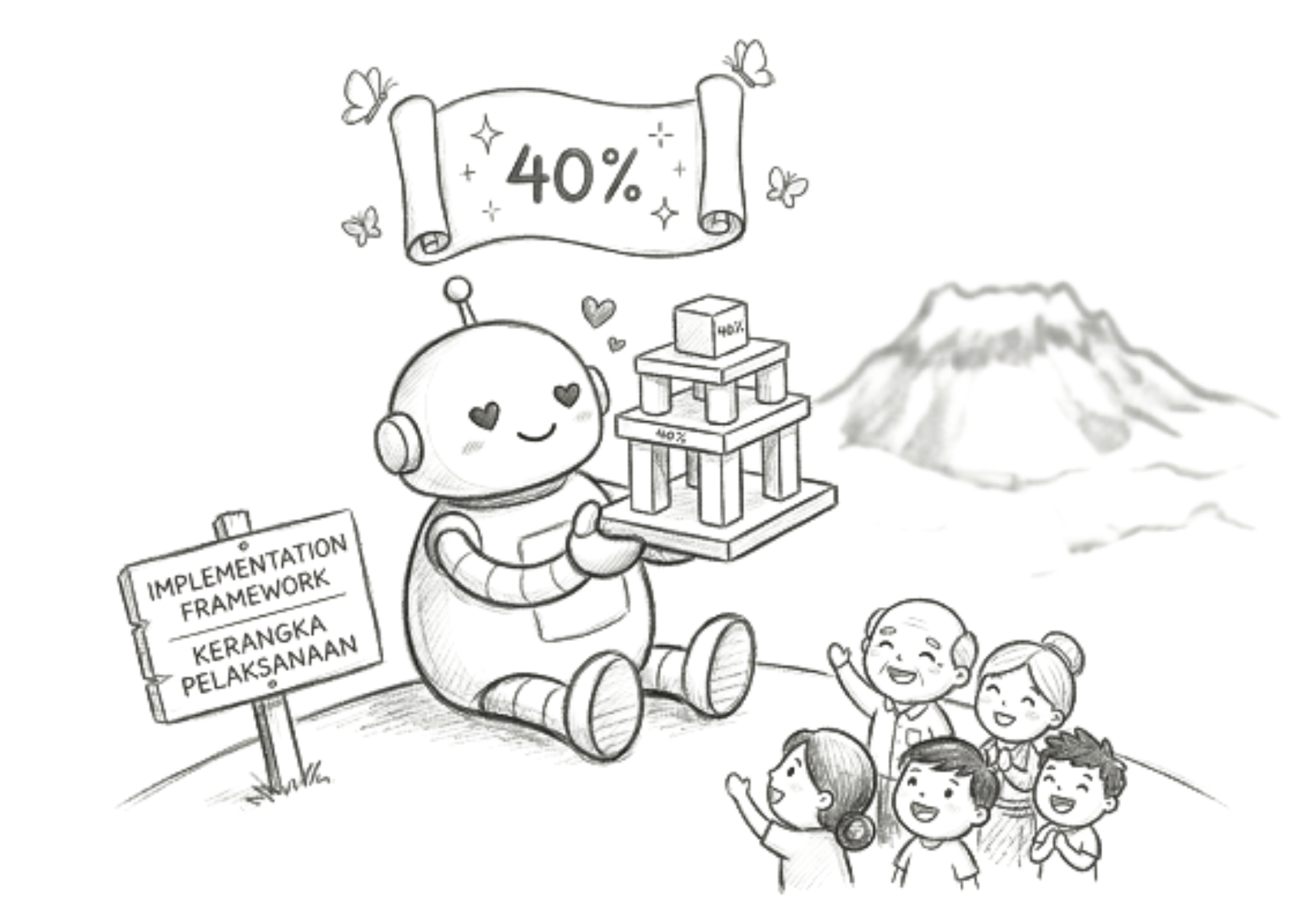
In order to avoid this, the accountability frameworks must be built now. We have a small window between the ruling and the money arriving. If we wait until after, it will be too late.
The people of Sabah must demand that the frameworks are built now with full transparency and with the participation of all stakeholders.
Do not leave this crucial task to career bureaucrats in the government departments or ministries.
These are the questions Sabah needs to debate. Starting now. Before the cheques are written and the contracts are signed.
The People Development Foundation (PDF), in collaboration with the Borneo Heritage Foundation (BHF), is convening a forum to do exactly that. Three speakers will address the mechanisms and implementation of the 40 per cent disbursement. This is the first in a series of three forums designed to force these questions into the open.
The public is invited to check out the PDF website for more information.
Come. Argue. The future must be determined by the masses. Not bureaucrats.