The Students Are Paying a Debt They Did Not Incur
The shrinking crowds at Gempur Rasuah's rallies measure the credibility debt of every faction that weaponised corruption before the students took it up, and repaying it demands accountability built at home, in Sabah, rather than a fourth march.
6 July 2026
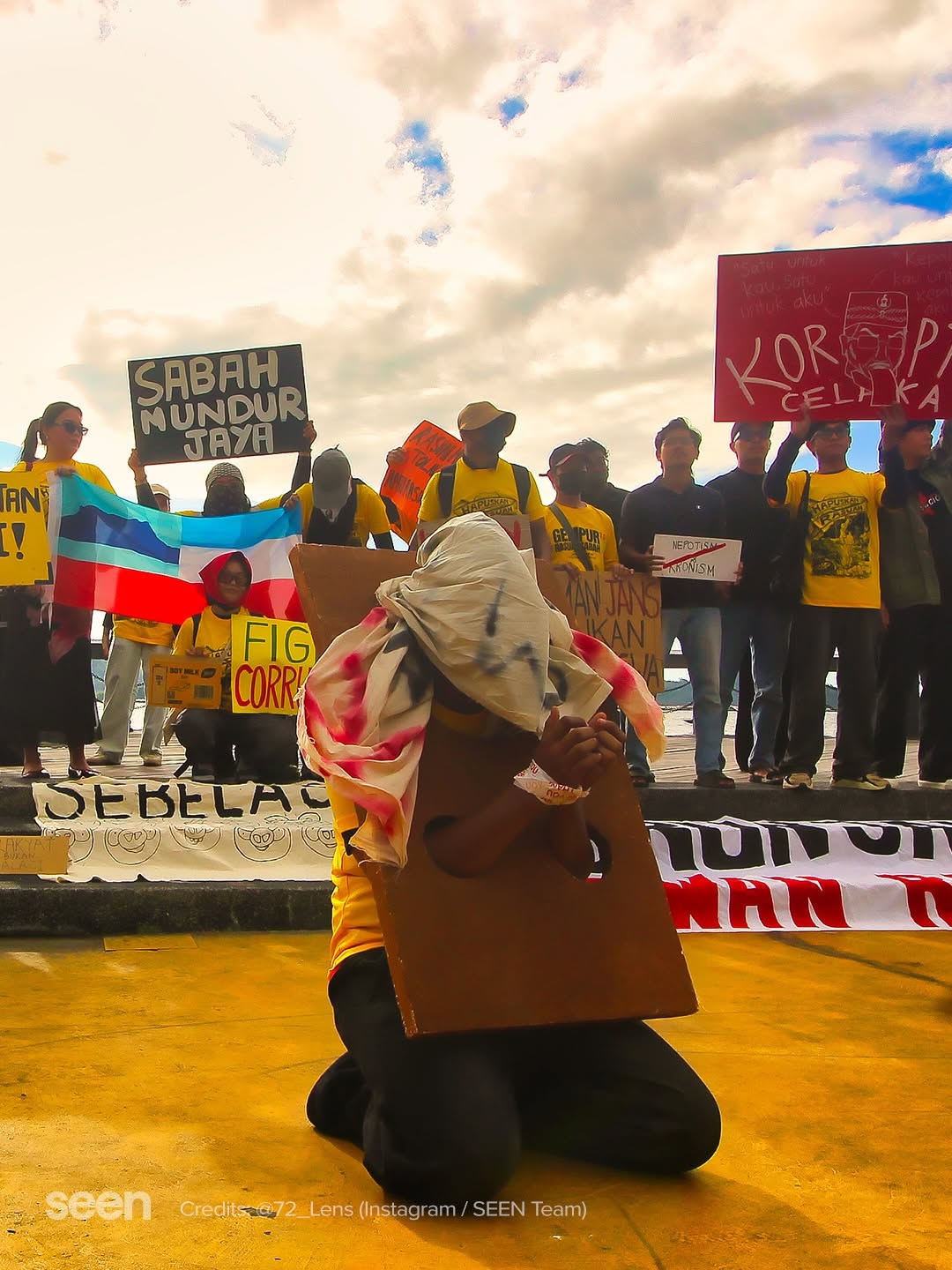
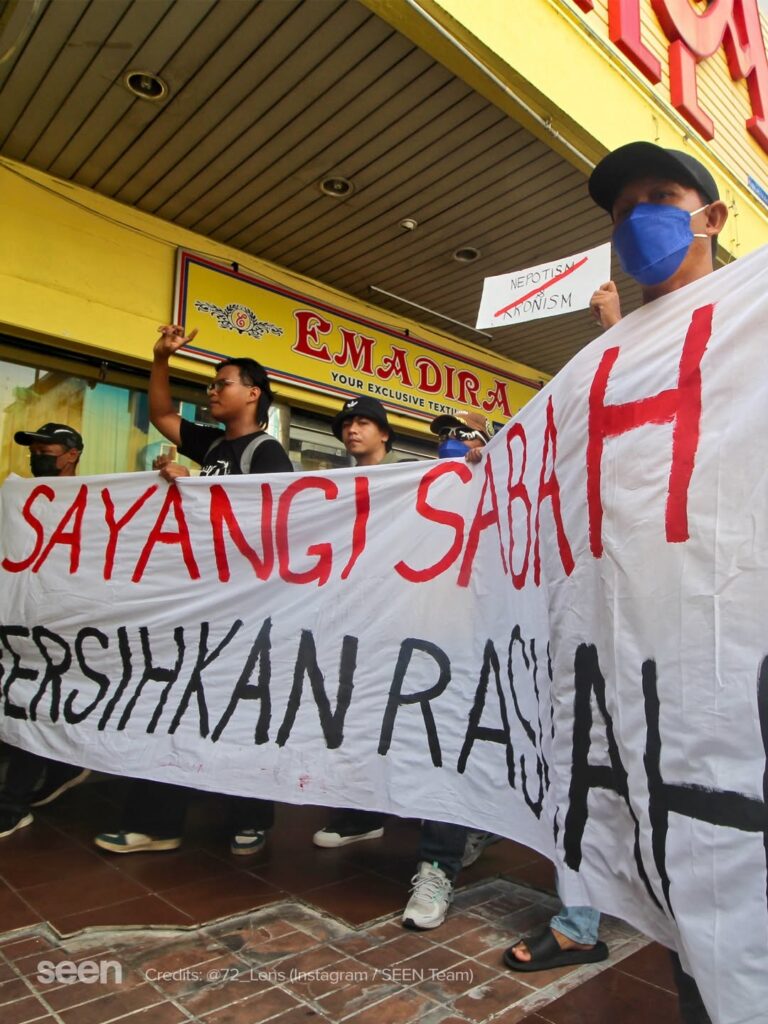
Last weekend, Gempur Rasuah Sabah 3.0 marched from Suria Sabah to the Dataran Todak Waterfront carrying four demands: the prosecution of the assemblymen implicated in the mining licence scandal, an end to nepotism and cronyism in the award of contracts, a Royal Commission of Inquiry into the alleged corporate mafia within the MACC, and the passage of a Political Funding Act. A counter-gathering, Bangkit Sabahan 2.0, assembled the same afternoon to express support for the state government. Police kept the two groups apart, and both dispersed without incident.
This was the third Gempur Rasuah rally in nineteen months. The first, on New Year’s Eve 2024, drew around fifty marchers. The second, in June 2025, drew around forty. Ahead of the third, the organisers ran a statewide roadshow, sold campaign shirts to fund their own logistics, and reached audiences in the thousands online. News coverage put the crowd on the street at around twenty. The movement’s promotional reach has grown with every iteration while its physical turnout has halved, and that inversion, thousands watching, twenty walking, is the datum this piece exists to explain.
Credit must be given plainly. The students of Suara Mahasiswa have done what no politician, commission or enforcement agency has managed: they have kept the assemblymen scandal in public view for more than a year, through three rallies, at real personal cost. Participants in the second rally were investigated for nine alleged offences. Their demands are specific and institutional rather than sloganeering. Across three gatherings, the violence and provocation on record came from around them, and never from their programme. Whatever one makes of their methods, their discipline has been superior to that of most of the adults commenting on them.
The state’s response deserves equal attention. Days before the second rally, the graphic artist Fahmi Reza was barred from entering Sabah. Four days before the third, Bersih executive director Asraf Sharafi was stopped at Kota Kinabalu International Airport under a Sabah Warning Notice, refused entry to the state where his wife and children live, and deported to Kuala Lumpur the same night. No reason was disclosed. One government-aligned voice defended the ban as an exercise of Sabah’s rights under the Malaysia Agreement. We should sit with that framing. The immigration autonomy Sabahans secured in 1963 as a safeguard against Peninsular domination is now deployed to filter which Malaysians may speak about corruption on Sabahan soil. Autonomy used this way protects the government of the state rather than its people, and every Sabahan who values the MA63 settlement should be alarmed to see it spent so cheaply.
The question being asked around town is why so few Sabahans joined the march. The easy answers, apathy, culture, fear, do not survive contact with the evidence, because Sabahans mobilise in numbers for causes they trust. The culture excuse in particular has already been answered from the floor: to those who declared that demonstrations are not our culture, one commenter replied by asking whether corruption is. The more useful question concerns what corruption has become in Sabah’s politics, and the answer is an instrument. Allegations surface on political timetables. Enforcement is widely perceived as selective, and the perception has national reinforcement: the fugitive at the centre of the largest theft in the country’s history has seen Malaysia’s Red Notice against him quietly lapse while lesser figures are pursued with vigour. Every anti-corruption gathering in Kota Kinabalu now summons a mirror gathering in defence of the government of the day. A public that watches the corruption issue function as ammunition in factional combat learns to discount each new mobilisation as another move in the game, whatever the sincerity of its organisers. The students are paying down a credibility debt incurred by every faction that handled the issue before them.
Nor will the ballot box redeem what the street cannot. Sabah has changed governments repeatedly across the past two decades, and each change reshuffled the custodians of the system without disciplining the system itself. Elections select administrators. Accountability comes from institutions that sit close enough to what they monitor to bite, and that last longer than a news cycle. This is the subsidiarity principle applied to scrutiny: oversight, like decision-making, belongs at the lowest level competent to exercise it, and in Sabah that level is Sabahan.
Three changes would serve the movement better than a fourth march. First, retire the borrowed grammar. Yellow shirts, city processions and memoranda belong to a Peninsular protest tradition that Sabahan politics has already coded as partisan, and the aesthetic quietly contradicts the movement’s claim of independence. A Sabahan accountability movement should look, sound and organise like Sabah. Second, match the target to the reach. Two of the four demands ask federal institutions to reform themselves, and no procession in Kota Kinabalu will move Putrajaya. The scandal that started this movement is a state scandal, its records sit in state institutions, and its prosecutions will proceed or stall in courts the students can attend and document. Third, convert the event into an institution. A march ends by evening; a public record persists. A maintained tracker of every charge, hearing and outcome in the mining scandal, systematic monitoring of assembly proceedings, and publication of what the state’s companies decline to disclose would give Sabahans something no counter-rally can drown out. The state can stop an activist at the airport. It cannot stop a well-kept public record.
A crowd of twenty last weekend recorded the depth of public discounting after years in which corruption served every side as a weapon. Rebuilding the credibility of the fight is the precondition for winning it, and that work is done closest to home. Autonomy tells Putrajaya to keep its hands off Sabah. Subsidiarity tells Sabahans what to do with the hands they have.