The Burkina Faso Question: What If Nobody Is Coming to Save Us?
Burkina Faso proved that dependency is a policy, not a fate. Sabah's version is enforced by nothing but habit, and breaking it does not require a strongman.
15 June 2026
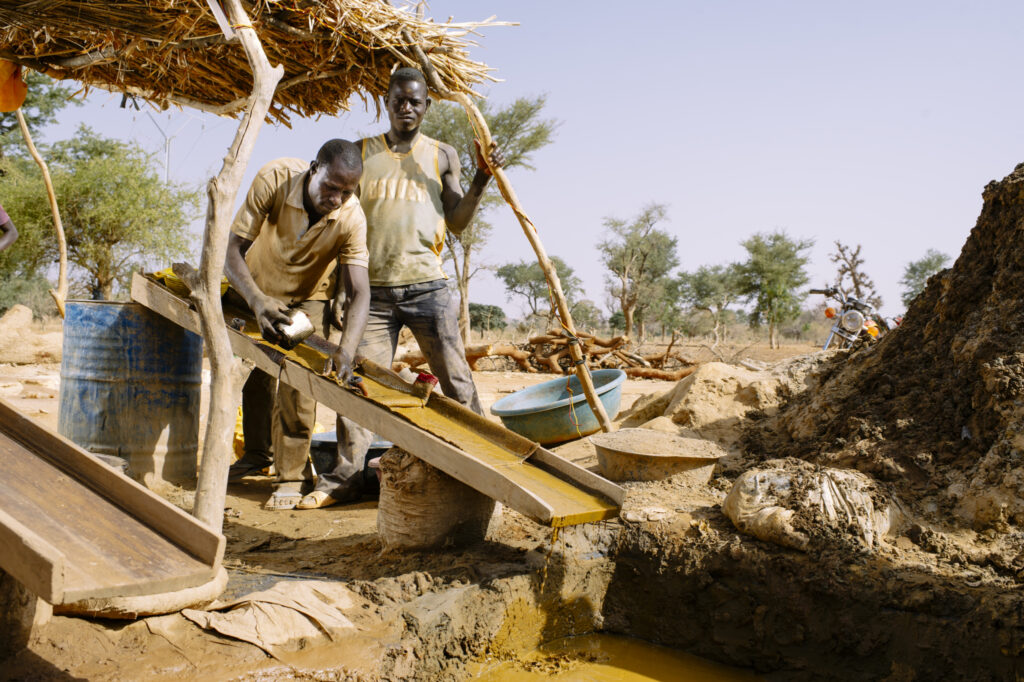
In September 2022, a 34-year-old army captain took power in one of the poorest countries on earth, a landlocked state with no functioning security guarantee, an insurgency burning through half its territory, and an economy organised around the export of raw gold to foreign refineries and the import, at retail prices, of nearly everything its people consumed. Within three years, Burkina Faso had expelled the foreign troops stationed on its soil, opened its first national gold refinery, rewritten its mining code to require local ownership stakes, recovered mines from foreign operators, and launched a food sovereignty programme that put tractors into villages that had never seen one.
Whatever else can be said about Ibrahim Traoré, and a great deal can, one fact survives every caveat: a country with a fraction of Sabah’s resources and none of its advantages decided that its development was its own business, and then conducted itself accordingly. The question this poses for Sabah is an uncomfortable one, and it deserves to be asked in full rather than gestured at, because the discomfort is precisely where the value lies.
The mirror we keep avoiding
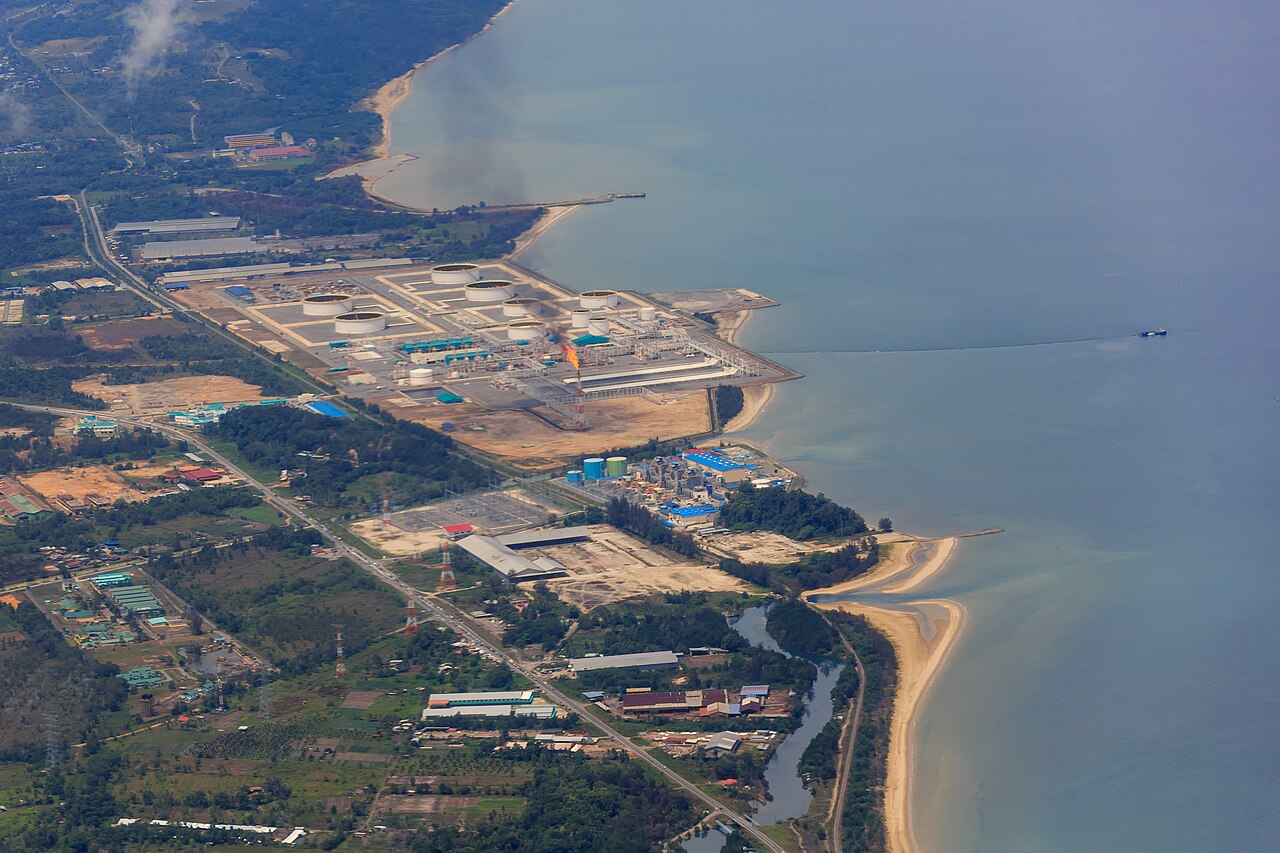
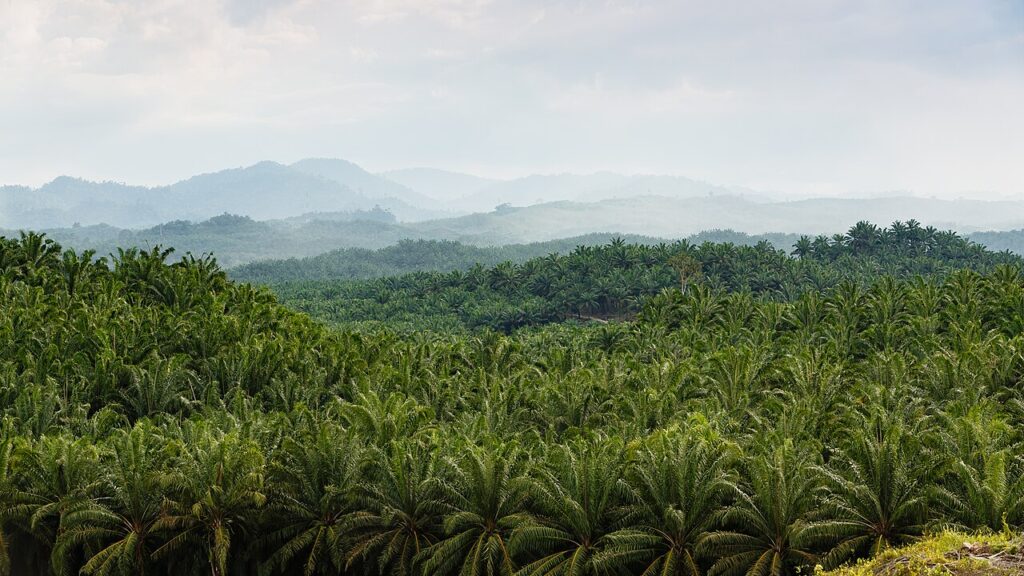
Consider, honestly, what Sabah does with what it has. We pump crude oil and receive a five per cent royalty while the value is added elsewhere by companies answerable to shareholders and ministries a sea away. We grow oil palm across some of the most productive land in the region and export it barely processed, only to import the finished goods manufactured from our own crop. We felled a rainforest over sixty years without ever building a furniture industry worthy of the timber that passed through our ports, and we import most of the rice we eat while agricultural land sits under-used or locked in arrangements that benefit everyone except the people who live on it.
The pattern is not mysterious. Raw material flows out; finished goods flow back in; and the margin, the jobs, the skills and the industrial capacity accumulate at the other end of the exchange. This is the colonial trade structure in its purest form, the periphery supplying material while the centre supplies everything that carries a price tag, and it is the precise arrangement that Ouagadougou decided to break. Burkina Faso’s centre was Paris. Ours is rather closer to home, and it flies a flag we also salute.
Here, though, is the part of the comparison that ought to sting. Burkina Faso’s dependency was enforced by instruments of real power: French garrisons on its territory, monetary policy administered through the franc zone, IMF conditions attached to every lifeline, and a succession of governments that owed their survival to foreign patrons. Breaking that arrangement required a coup, because nothing softer was available to the people who wanted it broken.
Sabah’s dependency, by contrast, is enforced by nothing at all. There is no garrison, no currency board in a foreign capital, no structural adjustment programme dictating our budgets. Our dependence rests on a legal arrangement we signed, a revenue entitlement we have never fully collected, and a habit of mind that has come to treat Putrajaya’s cheque as the natural order of things rather than as one arrangement among several possible ones. Traoré had no choice. Sabah does, and has had one for sixty years, which makes our continued dependence more embarrassing rather than less.
What we are not saying
Precision matters here, because precision is what separates an argument from a slogan, and this argument will be deliberately misread by people with an interest in doing so.
This is not a case for secession. Sabah’s rights under the Malaysia Agreement 1963 are extensive, largely unexercised, and entirely legal to demand, and a state that cannot feed itself, fund itself or staff its own industries would gain nothing from a new flag except a front-row seat at its own failure. South Sudan achieved its independence in 2011 AD with the world’s blessing and the ink of a referendum behind it; its citizens can testify to what sovereignty tastes like when there is no capacity underneath it.
Nor is this a case for imitating Traoré’s methods, and the distinction deserves more than a sentence. His programme is nationalisation: a state refinery, state mining stakes, a command economy answering to one man in fatigues. That is not liberation from concentrated power but concentrated power with a new address, and the entire project now lives or dies with a single soldier’s pulse. Burkina Faso traded dependence on Paris for dependence on a junta, and when the message and the man become one thing, the message dies with the man. Sabah should want neither master, not the distant one and not a local one in a shinier uniform.
What Ouagadougou actually offers us is a narrower and more useful lesson: that dependency is a policy rather than a fate, and that it can be reversed in years rather than generations once a people decides the arrangement no longer serves them. That is the whole of the lesson. Everything beyond it is method, and the method must be ours.
Sovereignty in practice before sovereignty in law
The thesis, stated plainly, is this: a Sabah that generates its own revenue, feeds itself, skills its own people and processes its own resources does not need to beg Putrajaya for anything, and the constitutional question becomes a formality to be settled from strength at a moment of our choosing. A Sabah that cannot do these things would be helpless with or without the federation, because legal status is downstream of capacity and always has been. The work, in other words, is capacity, and it proceeds on four fronts.
The first is revenue that we generate rather than receive. Every ringgit of federal allocation is a ringgit of leverage held over us, and the answer is not a larger allocation but enterprise that does not route through a federal ministry at all: downstream processing, local manufacturing, and services sold beyond our borders to customers who have never heard of the ministry in question.
The second is a literacy that the system does not issue. Our schools produce certificate-holders trained to wait for postings, while the knowledge that will actually matter over the coming decades is precisely the kind that nobody licenses: financial literacy, trade skills, systems thinking, and the ability to read power. No ministry issues it, and no ministry can withhold it.
The third is guilds rather than gig work. A welder who owns his tools, his workshop and his order book is a sovereign economic unit, and ten thousand of him amount to an economy. Skills held in families and passed through communities cannot be reallocated by a directive from anywhere, which is exactly what recommends them.
The fourth is the end of the welfare reflex. A man given a monthly transfer is a client, and clients vote as instructed; a man given a functioning land title, a skill and a market is a citizen. Every aid programme announced in Sabah should be read against a single question: does this build capacity, or does it purchase dependence?
Readers of this publication will recognise these as distributist positions, and they are. Widespread productive ownership is not a romantic slogan but the only form of independence that no coup can deliver and no election can repeal. Burkina Faso concentrated its recovered sovereignty in the state, and that concentration is now its greatest vulnerability, since sovereignty held by one man has a single neck to squeeze. Spread across ten thousand owners, it has none.
The bill, printed in advance
Honesty requires the cost sheet, because our critics will produce one if we do not, and theirs will be less charitable.
Federal money is real money. It sits in real budgets, pays real salaries and funds real projects, however badly those projects are delivered, and a Sabah that moves towards self-reliance will feel the withdrawal first among the people least able to absorb it: the aid-dependent household, the civil servant, the contractor class raised on federal tenders. That constituency is most of the electorate, which is precisely why no sitting politician will campaign on this argument, and why it is addressed to no sitting politician.
It is addressed, instead, to you: to the household that starts storing water before the drought rather than after it, to the father teaching his son a trade the school does not offer, to the smallholder who joins a cooperative instead of waiting for a subsidy, and to the young Sabahan reading this who feels something sharpen and does not yet know that the feeling has a name, and that the name is responsibility.
Burkina Faso needed one man because its people had been disarmed of every other instrument. Sabah still holds its instruments, in land, law, skills and time, and the question was never whether Putrajaya will save us, because it will not and was never going to. The question is what a serious Sabahan does once that sentence stops being an accusation and becomes a plan. Nobody is coming. That is not the bad news. It is the job description.